The creation of a double pipe heat exchanger to analyze the viability of graphene doped nanofluids
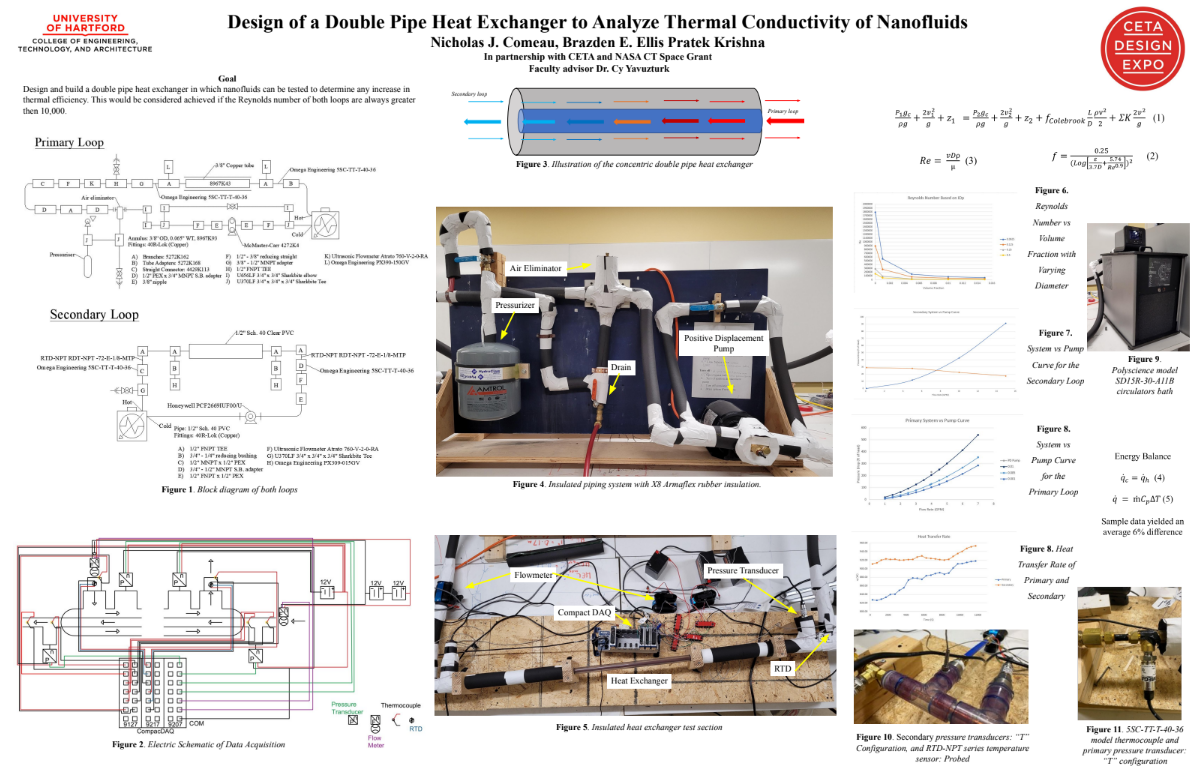
This project focused on designing and building a counterflow double‑pipe heat exchanger to evaluate how graphene‑doped nanofluids influence thermal conductivity and heat‑transfer performance. The system was engineered to maintain turbulent flow in both channels, enabling future researchers to collect high‑quality experimental data.
As the project manager and technical lead, I guided the team through mechanical design, instrumentation, LabVIEW development, and system assembly. The final rig was fully constructed, aligned, instrumented, and operational.
Experimental Goals
Design a double‑pipe heat exchanger suitable for nanofluid testing.
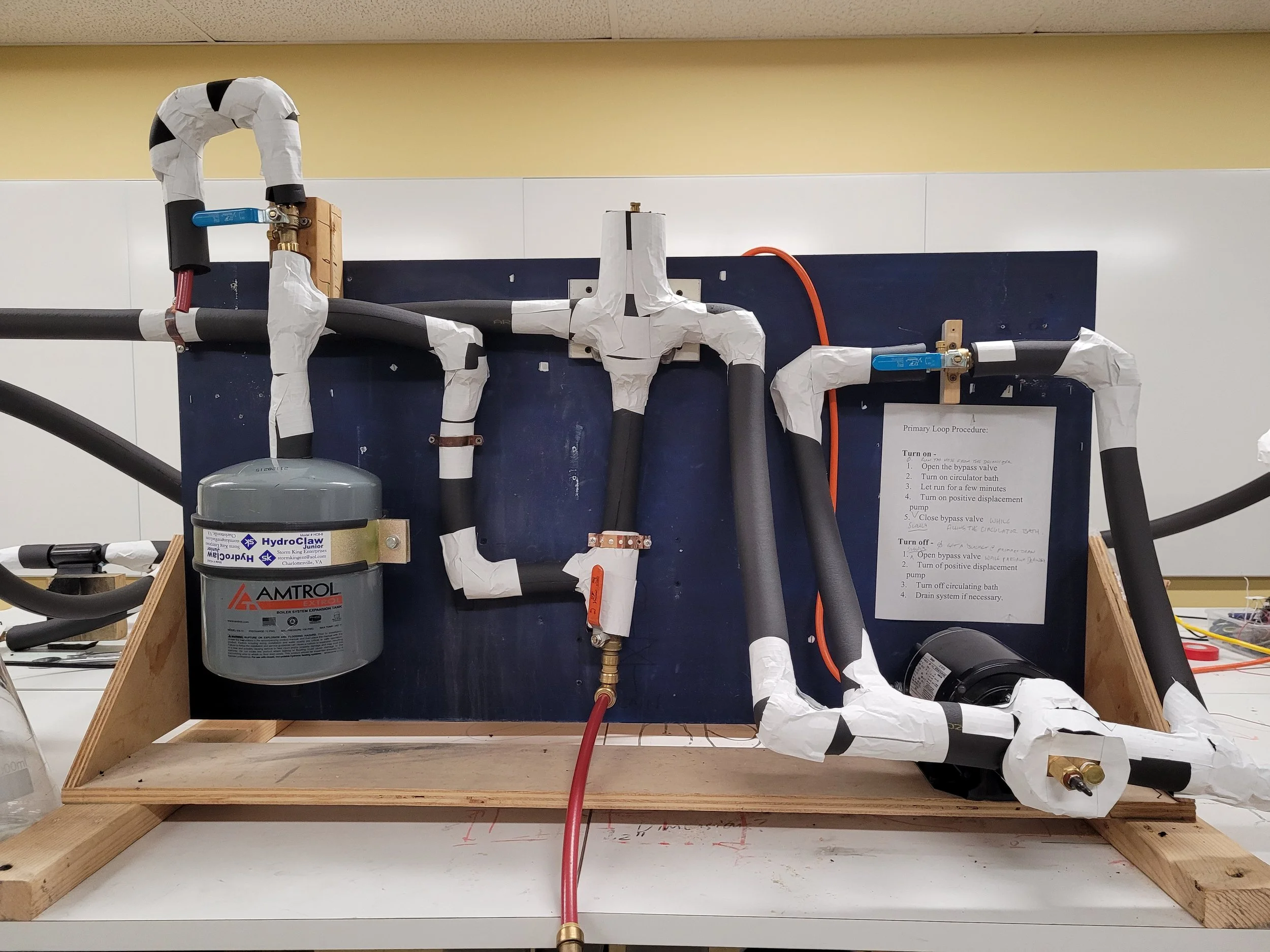
Maintain turbulent flow (Re > 10,000) in both primary and secondary loops.
Enable comparison between base fluid (deionized water) and graphene‑doped nanofluids.
System & Integration Goals
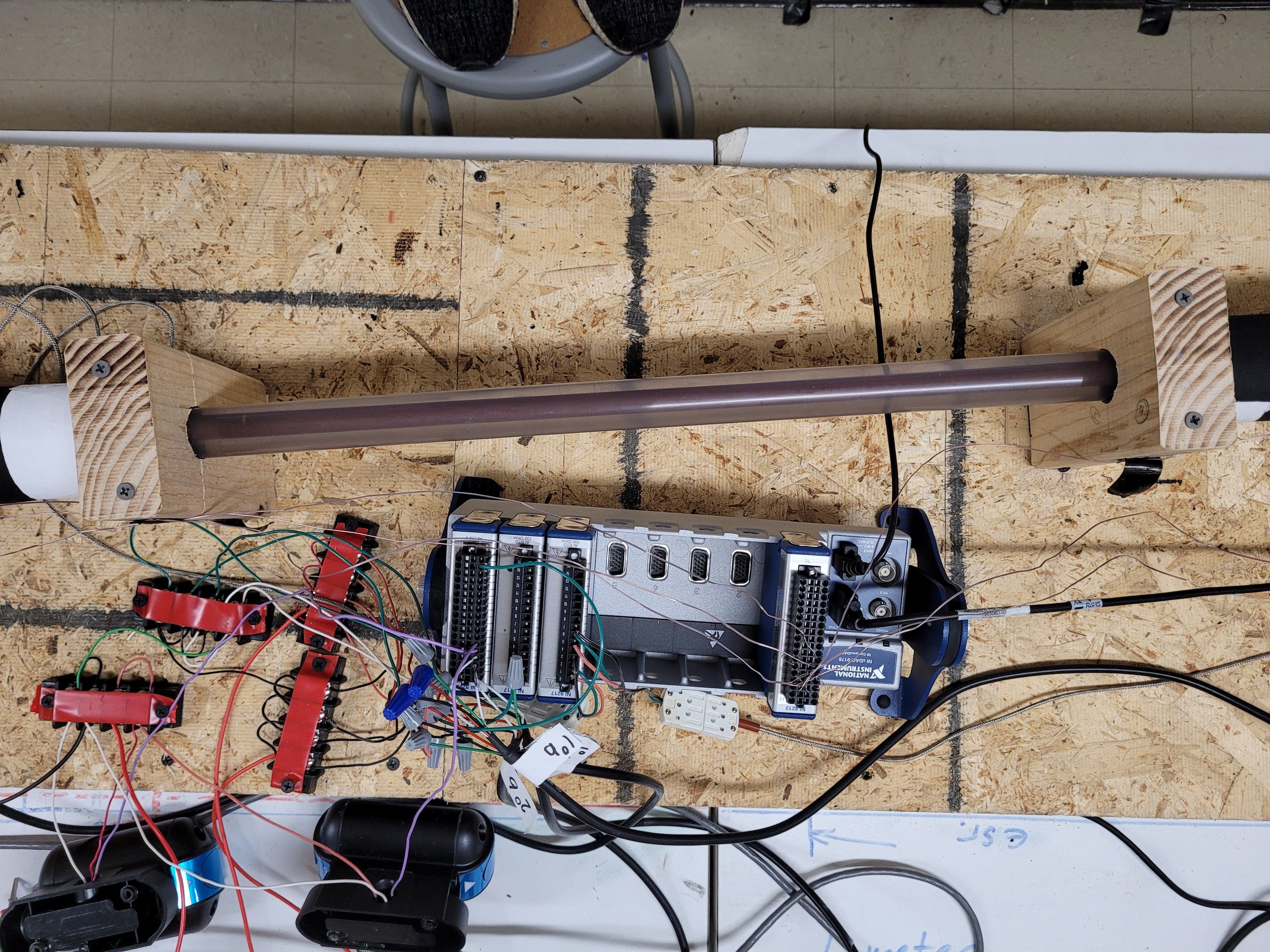
Integrate LabVIEW + NI DAQ for synchronized temperature and flow measurements.
Ensure geometric concentricity of the heat exchanger for accurate annulus flow.
Deliver a modular, research‑ready platform for future experiments.
Challenges & Solutions
LabVIEW Data Acquisition
Building the DAQ system from scratch required careful handling of sensor calibration, scaling, and timing. I developed the LabVIEW code to read RTDs, flow meters, and pressure transducers, reduced noise through filtering and proper wiring, and created a clean UI so future users can quickly configure and log tests.
Concentricity & Mechanical Alignment
Maintaining concentricity between the copper inner tube and PVC outer tube was critical for accurate annulus flow. I designed and iterated custom supports and fixtures to keep the tubes aligned along the full 1.4 m length, minimizing dead zones and ensuring predictable flow behavior.
Team Coordination
The team struggled at times with staying focused and solving open‑ended problems. I stepped into a more active leadership role, clarified tasks, unblocked technical issues, and personally owned critical path items to ensure the system was completed and fully functional.
Procedure and findings were summarized and presented as follows: